 By Madhavan A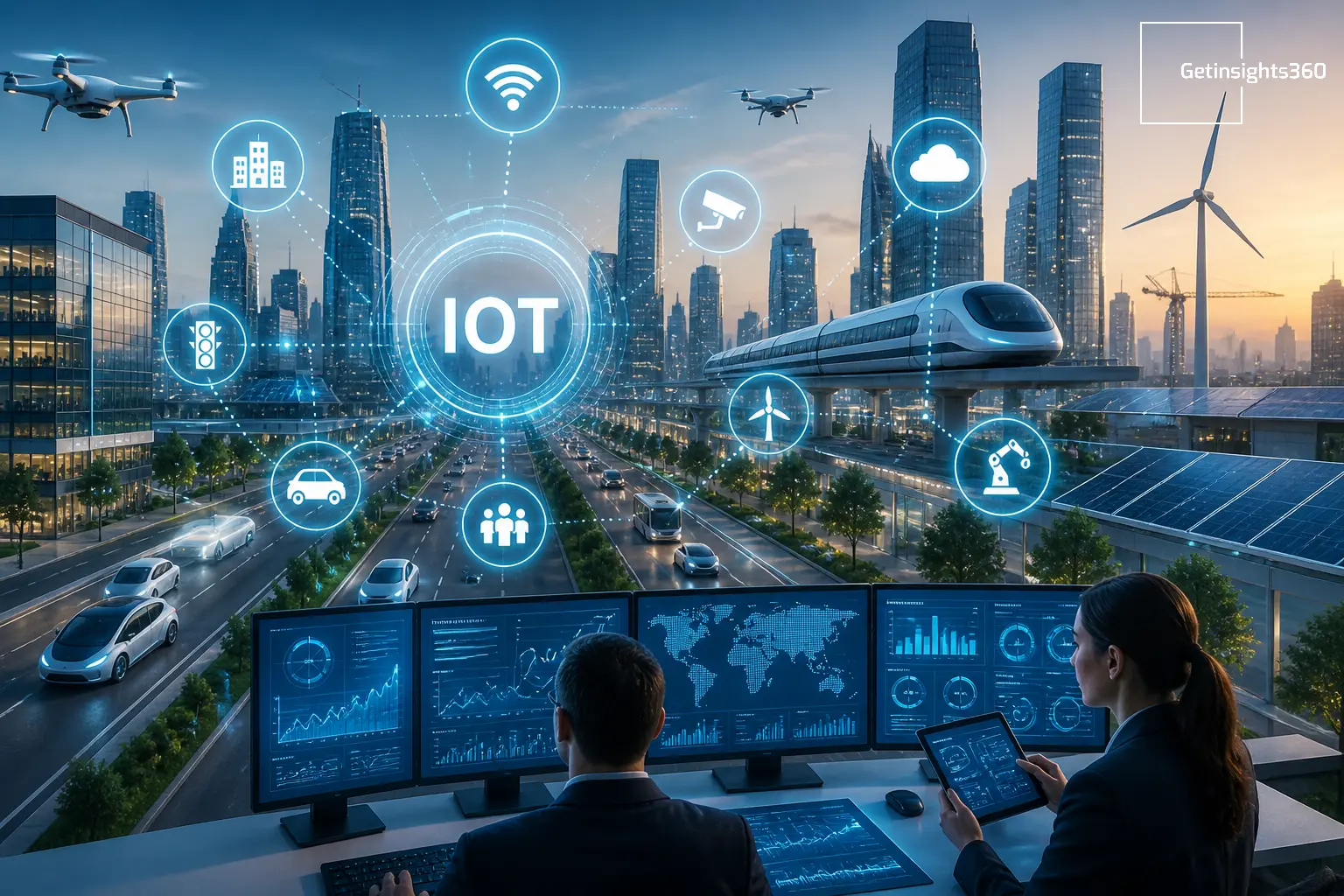
The Internet of Things (IoT) has moved far beyond simple device connectivity. In 2026, IoT is evolving into an intelligent ecosystem powered by artificial intelligence, real-time data processing, and advanced connectivity. Businesses are no longer using IoT just to collect data—they are using it to make faster decisions, automate operations, and create new revenue opportunities.
As industries accelerate their digital transformation, understanding the latest IoT trends is critical for staying competitive. This article explores the top IoT trends in 2026, along with their real-world applications and business impact.
What is Driving IoT Trends in 2026?
Several factors are fueling the rapid growth of IoT technologies. The increasing number of connected devices is generating massive amounts of data, which requires advanced analytics and intelligent processing. Artificial intelligence is being integrated with IoT systems to enable predictive insights and automation.
At the same time, the expansion of 5G networks is improving connectivity, allowing devices to communicate faster and more reliably. Edge computing is also playing a crucial role by processing data closer to the source, reducing latency and improving performance. Additionally, industries such as healthcare, manufacturing, and smart cities are adopting IoT at scale, further driving innovation.
Top 10 IoT Trends in 2026
1. Edge AI and Real-Time Processing
Edge AI is becoming a key trend in IoT by enabling data processing at or near the device level instead of relying entirely on cloud systems. This approach reduces latency and allows for real-time decision-making.
For example, in industrial environments, machines equipped with edge AI can detect anomalies instantly and trigger corrective actions. This minimizes downtime and improves operational efficiency. Businesses benefit from faster processing, reduced bandwidth usage, and improved data privacy.
2. AIoT (Artificial Intelligence of Things)
AIoT refers to the integration of artificial intelligence with IoT systems. This combination allows devices to learn from data, adapt to changing conditions, and make intelligent decisions.
In smart homes, AIoT systems can analyze user behavior and automatically adjust lighting, temperature, and security settings. In business environments, AIoT enhances automation, improves accuracy, and reduces manual intervention. As a result, organizations can achieve higher productivity and better customer experiences.
3. Digital Twin Technology
Digital twins are virtual replicas of physical assets, systems, or processes that are continuously updated with real-time IoT data. This technology enables businesses to simulate, analyze, and optimize operations without affecting real-world systems.
Manufacturers use digital twins to test production processes and identify inefficiencies before implementing changes. This reduces risks, improves product quality, and lowers operational costs. Digital twins are also widely used in smart cities and infrastructure management.
4. 5G and Advanced Connectivity
The rollout of 5G networks is significantly enhancing IoT capabilities. With higher speeds, lower latency, and the ability to support a large number of connected devices, 5G is enabling new use cases that were not possible before.
Applications such as autonomous vehicles, remote healthcare, and smart cities rely on real-time data transmission, which 5G makes possible. For businesses, this means improved efficiency, faster communication, and the ability to deploy large-scale IoT solutions.
5. IoT Cybersecurity and Zero Trust
As the number of connected devices increases, cybersecurity has become a major concern. IoT systems are often vulnerable to cyberattacks, making Zero Trust in IoT Security a top priority in 2026.
The Zero Trust model is gaining popularity as it requires continuous verification of users and devices before granting access. This approach reduces the risk of unauthorized access and data breaches. Businesses are investing in advanced security measures to protect sensitive data and ensure compliance with regulations.
6. Predictive and Prescriptive Maintenance
Predictive maintenance uses IoT sensors and data analytics to identify potential equipment failures before they occur. Prescriptive maintenance goes a step further by recommending actions to prevent these failures.
Industries such as manufacturing, aviation, and energy are leveraging these technologies to reduce downtime and extend the lifespan of their assets. This not only lowers maintenance costs but also improves operational reliability.
7. Smart Cities and Infrastructure
IoT is playing a vital role in the development of smart cities. Governments and municipalities are using IoT technologies to improve urban infrastructure, manage traffic, optimize energy consumption, and enhance public safety.
For example, smart traffic management systems use real-time data to reduce congestion, while smart lighting systems adjust brightness based on environmental conditions. These applications improve the quality of life for citizens and create new opportunities for businesses.
8. IoT Data Analytics and Automation
Data is at the core of IoT, and advanced analytics is transforming how businesses use this data. IoT data analytics enables organizations to gain insights, identify patterns, and make informed decisions.
Automation is another key aspect, as IoT systems can trigger actions based on data insights without human intervention. For instance, supply chain systems can automatically adjust inventory levels based on demand forecasts. This improves efficiency, reduces errors, and enhances productivity.
9. Sustainable and Green IoT
Sustainability is becoming a major focus for businesses and governments, and IoT is helping achieve environmental goals. Green IoT solutions are designed to reduce energy consumption, minimize waste, and support environmental monitoring.
Examples include smart grids that optimize energy usage and agricultural systems that use sensors to reduce water consumption. By adopting sustainable IoT practices, organizations can reduce costs and meet regulatory requirements while contributing to environmental protection.
10. Computer Vision in IoT
Computer vision is enabling IoT devices to analyze and interpret visual data. This technology is widely used in applications such as surveillance, quality control, and customer analytics.
In manufacturing, computer vision systems can detect defects in products during the production process. In retail, smart cameras can analyze customer behavior and improve store layouts. This enhances accuracy, improves safety, and enables new business insights.
IoT Trends in India
India is emerging as a significant player in the global IoT landscape. Government initiatives such as smart city projects and digital transformation programs are driving IoT adoption across various sectors.
Industries such as agriculture, healthcare, and logistics are increasingly using IoT solutions to improve efficiency and reduce costs. With growing investments and technological advancements, India is expected to see rapid growth in IoT adoption in the coming years.
Benefits of IoT Trends for Businesses
The benefits of IoT for business in 2026 go far beyond simple automation, helping organizations improve efficiency, reduce costs, and make real-time decisions. Adopting IoT technologies in 2026 offers several benefits for businesses. These include improved operational efficiency, real-time decision-making, cost savings, and enhanced customer experiences.
IoT also enables automation, reduces manual effort, and provides valuable insights that can drive innovation. Organizations that leverage IoT effectively can gain a competitive advantage and achieve long-term growth.
Challenges of IoT in 2026
Despite its benefits, IoT presents several challenges. Data privacy and security concerns remain major issues, especially with the increasing number of connected devices. Integration with existing systems can be complex, and the initial investment required for IoT implementation can be high.
Businesses must address these challenges by adopting strong security measures, choosing scalable solutions, and developing a clear implementation strategy.
How Businesses Can Implement IoT in 2026
To successfully implement IoT, businesses should start by identifying specific use cases that align with their goals. Choosing the right technology stack and ensuring data security are critical steps.
Organizations should begin with pilot projects to test feasibility and then scale their solutions gradually. Continuous monitoring and optimization are also important to ensure long-term success.
Future of IoT Beyond 2026
The future of IoT is expected to be driven by automation, artificial intelligence, and hyper-connectivity. IoT systems will become more autonomous, capable of making decisions without human intervention.
As technologies continue to evolve, IoT will play a central role in shaping industries and driving digital transformation. Businesses that stay ahead of these trends will be better positioned to succeed in the rapidly changing technological landscape.
Conclusion
IoT in 2026 represents a shift from connected devices to intelligent ecosystems. With advancements in AI, edge computing, and connectivity, IoT is transforming how businesses operate and deliver value.
Understanding and adopting these trends is essential for organizations looking to remain competitive. By leveraging IoT effectively, businesses can improve efficiency, reduce costs, and unlock new opportunities for growth.
💡 Stay tuned to Getinsights360 for more insights and updates on emerging technologies across AI, ML, AR/VR, Blockchain, RPA, IoT, and Cybersecurity
FAQs
The key IoT trends in 2026 include Edge AI, AIoT, digital twins, 5G connectivity, predictive maintenance, and enhanced cybersecurity using Zero Trust models.
AI is transforming IoT by enabling real-time data analysis, automation, predictive insights, and smarter decision-making across industries like healthcare, manufacturing, retail, and smart cities.
Edge computing processes data closer to devices, reducing latency, improving real-time performance, enhancing privacy, and minimizing bandwidth usage compared to traditional cloud-based IoT systems.
Industries like healthcare, manufacturing, agriculture, logistics, retail, and smart cities benefit significantly from IoT through automation, efficiency improvements, cost reduction, and enhanced decision-making.
Major IoT challenges include data security risks, privacy concerns, integration complexities, high initial costs, and managing large-scale connected device ecosystems efficiently and securely.